Recovery: The Other 23 Hours of the Day
When I attend meetings, I’ve always believed that living the program of recovery happens during the other 23 hours of the day. Meetings are my safe port in a storm. When the meeting is over and I go out into the world, that is when I truly have the opportunity to practice my program. It is where I must face life as it comes and deal with reality on reality’s terms.
Meetings are my classroom for living. They are a safe place filled with comfort, fellowship, honesty, and understanding. They give me an opportunity for growth and reflection. When I attend, I listen carefully and take time to think about what is shared. By God’s grace, the fellowship enlightens and inspires me. In many ways, that is meditation. I have the opportunity to participate in life sober.
For me, attending meetings is about more than simply showing up. There is no predefined formula. No one takes attendance, and we have no truancy officers. There is purpose in being there. I need to ask myself, “Why am I here?” Recovery is not only about not drinking. It is about learning how to live life on life’s terms. It is about growth.
Meetings Are Meditation
Everything shared in a meeting is worthy of prayer and reflection—the jokes, the laughter, the tears, and the honesty. From beginning to end, a meeting is a sacred event to me. The AA readings—the Preamble, How It Works, the Twelve Traditions, and the Ninth Step Promises—all contain truths worth reflecting on.
In every meeting, there are words, thoughts, or stories that can change the course of my life. In my own sobriety, AA has become my church—a place where I witness miracles and find hope. It is where I recharge my spiritual battery and where I can help others find peace in sobriety. When I leave a meeting, I feel refreshed, strengthened, and resolved to live the rest of the day to the best of my ability and according to the will of my Higher Power.
I am truly blessed and deeply grateful for God’s grace in leading me to AA.
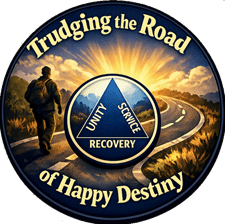 “Trudging the road of happy destiny” has come to describe for me the daily process of recovery in AA. Recovery is not a race to get well overnight so I can hurry on to other things. I’ve learned in my own life that completing the Twelve Steps does not earn me a certificate of completion. There are no diplomas in recovery.
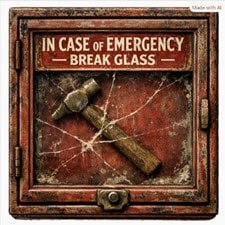 What I learned from that conversation was life-changing. I was really talking about my obsession with alcohol. Maybe it was subconscious, but mentally, I had not fully accepted the idea of living without it. It was almost as if alcohol remained behind glass marked “For Emergencies Only,” ready to be used whenever life became difficult enough.
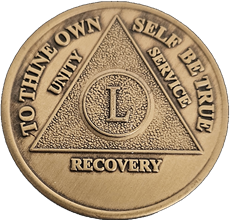 Reaching fifty years of continuous sobriety gave me a reason to stop and reflect on the journey. By that anniversary, I had lived 18,262 days without a drink—one day at a time.
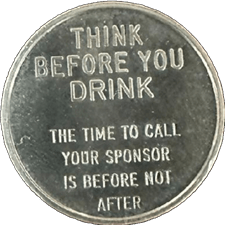 In the North Atlanta area, where I lived for more than thirty years, many AA groups hand out a shiny aluminum beginner’s chip. On the back it reads: “Call your sponsor before—not after—you take the first drink.”