Sobriety Chronicles

Sobriety Essays – Insights, Stories, and Lessons Learned in My Recovery

Menu
  • Sobriety Chronicles
  • AA Recovery Essays
  • AA Recovery Resources
    • AA Meetings By State
    • AA Prayers
    • AA Speakers Videos
  • About Jim C. Author
  • Contact Jim C
Menu

Author: Jim C.

Jim C. Is a AA sobriety author and writer of recovery stories, and lessons learned chronologically in over 50 years of his recovery in Alcoholics Anonymous.

Routines in AA Recovery

Posted on October 30, 2026October 22, 2026 by Jim C.

Routines in AA Recovery

There’s a lot of effort involved in getting sober—and even more in staying sober. Stopping drinking is one thing; staying stopped requires continued vigilance. In early sobriety, the first suggestions shared were to make 90 meetings in 90 days and not drink one day at a time. Those simple routines became the foundation of recovery and allowed a new life of sobriety to begin.

As Time Passes, More Is Needed

As time goes on in recovery, more is needed. It’s easy to reach a point where restlessness and discontent start wearing away at the peace of mind I’ve built. We can’t rest on our laurels or rely on past achievements. To keep growing, I needed more than just not drinking. The basics were covered, but spiritually I had begun to stagnate. AA should never be a hideout.

I found myself growing more irritable, less patient with others, and less enthusiastic about meetings. Attending a meeting shouldn’t feel uncomfortable or like a chore. Nothing dramatic happened, but I could feel my spiritual life becoming routine, and I was beginning to drift.

When I felt like that, I knew I had to change something up. We have a saying in AA: “If nothing changes, nothing changes.” So, I started making more Step Study and Step Discussion meetings while still getting to as many meetings as I could. That was a good start—the Steps are the program of recovery and contain the solutions for living a full and contented life. I also quickly learned that much of life happens outside the meeting rooms, and I still had to practice how to respond to situations as they came up.

Starting the Day

Starting the day with morning prayers and a daily meditation book—like Twenty-Four Hours a Day or Daily Reflections—became part of my routine. The AA morning prayer is a great way to begin the day with purpose. At night, the Tenth Step gives me a chance to look back on the day, notice the good, and see where I need to improve. In AA, we often call the last three Steps the maintenance Steps. Reviewing my day and talking it over with my sponsor or someone in the fellowship became another way to stay honest about where change was needed.

Sobriety isn’t a static condition or a one-time event. It’s only the beginning. One of the most important things I’ve learned is that there’s always room for improvement. For me, that can mean taking on service commitments, chairing a meeting, sponsoring someone, or reaching out to newcomers. These opportunities for growth became clearer the longer I stayed sober.

Routines Can Be Helpful

Daily practices such as prayer and meditation help keep me grounded, as do attending a consistent number of meetings each week and staying active in my home group. Yet even the most helpful routines can become mechanical. When I merely go through the motions instead of bringing sincerity and purpose to them, prayer and meditation begin to lose their meaning. When this occurs, spiritual growth can falter, and complacency can take hold—and for me, that is a dangerous place to be.

The Solution

The solution for me is to keep things new and fresh. That might mean reading new material, reaching out to others, or broadening my understanding of recovery. Yes, the routines are still there, but I try to approach them with the openness and willingness of a newcomer. That takes honesty to take stock of myself, humility to see where I can improve, and a willingness to make the changes needed.

Recovery grows through consistent routines, but those routines have to stay connected to a living spiritual purpose rather than becoming mere habits.

I remain grateful for the AA program of recovery and in awe of the newness each day offers. With the help of my Higher Power, I can keep learning, keep growing, and keep discovering that recovery isn’t something I accomplished years ago. It’s something I continue to live, one day at a time.

Staying Stopped Was the Hard Part

Posted on October 26, 2026October 20, 2026 by Jim C.

It Was Staying Stopped That Was the Hard Part

Over the years of my drinking, I found it was easy to stop drinking. It was staying stopped that was the hard part. Countless times, after a bender or an embarrassing event, I would go on the wagon, swear off the drink, and firmly believe I had kicked the problem forever. With full confidence in myself, I would lay low and avoid the people, places, and things that triggered my urge to drink. It worked for a while, but it was never a permanent fix.

At times like these, I would be so self-assured that I would even stop smoking, go to the gym, lose some weight, and go on a diet. I felt pumped up, like I was in charge!

However, just a short while later, when I had regained my confidence, I would make the fatal mistake of venturing back to my old haunts—the bars and the only life I knew. It was not unusual for my barroom friends (I use that term loosely) to remark, “Long time no see!” or “Looking good!”

Then came the real test of my willpower. The bartender or some other patron would offer me a drink. I would beam as I said, “No thanks!” The feeling was exhilarating. I was in charge, and I felt powerful. But these periods in my alcoholic life were brief, lasting no more than a few weeks or, at most, a few months.

When My Attempts to Control Drinking Failed

Looking back, those periods were uneventful. There were no turning points. It was as if I were performing a one-trick magic show, unable to pull off the same trick twice. My loved ones had seen the show before, and the reruns of me “controlling” my drinking were too predictable and painful to watch. They knew how the act would end.

My pattern of on-again, off-again drinking, with shorter and shorter periods of control or abstinence, left me with an emerging realization that I was out of control. I was powerless to turn things around on my own. It was demoralizing. My only solution was to drown those feelings of inadequacy and failure with even more drinks. I felt doomed to drink.

The Moment I Wanted to Stay Stopped

When I finally hit bottom, it wasn’t a dramatic one. There was no hospitalization, arrest, or major upheaval. Mine was a spiritual awakening of sorts.

I came home one day in my usual drunken state and saw my elderly mom on her knees praying. No words passed between us, but the realization hit me: she was asking God to help me stop drinking. It was a moment in time I’ll never forget.

At that moment, I said a silent prayer to God: I want to stop and stay stopped. I realized I did not have the power or strength to do this on my own.

The next day, I got hold of some AA literature, especially the pamphlet Is AA for You? It contained twelve questions. I took the short test and passed with flying colors. I got an “A,” so I called the phone number for Intergroup and was given the name of a meeting near me that night.

I was so numb from stopping drinking cold turkey that I didn’t ask any questions. I just wanted to go. It seemed as if I was blinded to everything else. Nothing mattered at that moment except that I needed to stop drinking and stay stopped. I was open to suggestions.

At my first meeting, thank God, I grasped the concept that I only had to do this one day at a time. At twenty-one years of age, I could not grasp the idea of swearing off alcohol for the rest of my life. Instead, I would take it one day at a time while learning to apply the Twelve Steps of recovery to my life.

Learning to Live One Day at a Time

This approach to recovery, along with the anonymity of the program, allowed me to return to the real world without making promises about my future behavior. I had a chance to demonstrate through my actions that I was changing, one day at a time. I did not boast, brag, or make promises about stopping. I simply tried to carry myself through life, living the AA Twelve Steps to the best of my ability.

In early recovery, progress can feel like looking at a single cell in an animation. There’s not a whole lot going on, and we may not see the changes taking place in ourselves. But when we string those days of sobriety together, we begin to see a pretty good moving picture. We go out into the world and add to the harmony of life. Friends, family, and co-workers begin to notice the changes in our behavior and attitudes. They may wonder what brought them about, but they benefit from them just the same.

Those who preceded me in recovery also showed me the meaning of anonymity. They made no claim of curing me and took no public credit for helping me rebuild relationships with friends, family, and co-workers. They simply shared their experience, strength, and hope, including their failures, to encourage me to strive for one more day of sober life.

They lived a glorious new life of humility, quietly practicing the principles of the program without seeking recognition. They were the quiet, unsung saints of my recovery.


The Wisdom of an AA Slogan

Posted on October 22, 2026October 19, 2026 by Jim C.

The Wisdom of an AA Slogan

One of the best slogans I heard in early AA still rings true for me today:

“Whose grief is shared is halved; whose joy is shared is doubled.”

Over the years, I have found this simple saying to be profoundly true.

At times, we all carry something that eats away at us inside. It troubles us, weighs us down, and robs us of peace of mind. Sometimes the pain is obvious; other times, it lurks below the surface, making it difficult to identify exactly what is wrong. I may simply feel down, depressed, or disconnected without fully understanding why.

Sharing Our Grief in AA

Looking back, I can see that there were times when I was not sharing everything going on in my life with my sponsor or at meetings. In sobriety, it is easy to give the impression that everything is fine when it is not. That is not rigorous honesty, and there is usually a price to pay. When I keep things bottled up, whatever is troubling me begins to fester. Thankfully, it does not happen often, but it has happened enough for me to recognize the pattern.

I can remember sitting in meetings when something a speaker said—or perhaps a topic someone shared about—would suddenly bring the issue troubling me to the surface. In an instant, I could see clearly what had been bothering me. Those were genuine “aha” moments.

Then I would begin to share, sometimes reluctantly. As the words left my mouth, the emotions would often follow. What started as a simple share became a moment of truth and honesty that I had not planned. It felt as though God had placed me in exactly the right place at exactly the right time.

Whether it happened in a meeting, with my sponsor, or during a conversation with a trusted friend, once I began talking, the words often poured out. Sometimes there were tears. Sometimes there were sobs. But there was always relief. Putting into words what was troubling me became a catharsis—a freeing moment.

Afterward, other members of the fellowship would often approach me and share similar experiences from their own lives. They would tell me how they had handled a similar situation and gotten through it sober. That was the lesson: if they could get through it sober, so could I.

Many times, a tremendous weight was lifted from my shoulders. I would leave the meeting with a new sense of purpose and peace of mind. I arrived carrying a burden and left with a completely different outlook. That was something to be grateful for.

Sharing Our Joy in AA

Then there is the other side of the slogan.

Sometimes something wonderful happens. It may be an insight, a new way of thinking, unexpected closure from a painful chapter of life, good news, a promotion, an engagement, or an answer to a long-held prayer. It may even be a spiritual awakening—a new way of seeing and living life.

When those moments occur, we cannot wait to get to a meeting and share them.

There is something special about sharing good news in AA and watching the faces around the room light up. People are genuinely happy for you because your experience reminds them that hope is real. It shows that sobriety works and that a Higher Power can bring about changes we might never have imagined.

Those moments do more than bring personal happiness. They strengthen the entire fellowship. They reinforce AA’s message of hope and remind us that if we hold on one more day, we may witness a miracle in our own lives.

What is being shared is not self-congratulation. It is gratitude. It is a gift offered back to the fellowship that helped make it possible. Everyone gets to participate in the joy.

That is what is meant by the phrase, “Whose joy is shared is doubled.”

I am grateful to AA and to my Higher Power that I have experienced both sides of that slogan. Through the years, I have learned that sharing my grief lessens its burden, while sharing my joy multiplies it. Time and again, the fellowship has proven the truth of those simple words.

Alcohol Was No Longer the Answer

Posted on October 18, 2026October 15, 2026 by Jim C.

Alcohol Was No Longer the Answer

Over my years in recovery, I have learned that no two days are ever exactly alike. Each day brings new experiences and opportunities to learn and grow.

In early sobriety, the challenge was learning how to stay sober one day at a time. Every day that I stayed sober gave me strength and confidence for the next. Looking back, it was a lot like learning to ride a bicycle. At first, there were training wheels: the guidance of a sponsor, regular meetings, and the first few steps of recovery. There were bumps, bruises, and scrapes along the way, but sooner or later, I began to get the hang of it.

AA works.

As I learned the basics, staying sober became less of a struggle, and life became easier to handle without alcohol.

Learning to Live Without Alcohol

Eventually, the training wheels came off. Living sober meant dealing with life as it came. Job performance, finances, relationships, family responsibilities, and everyday challenges became the new order of the day.

I was no longer simply learning how not to drink; I was learning how to live.

Many days were routine, but some carried tremendous emotional weight. In my drinking days, I could find a reason to drink whether life was good or bad. In sobriety, I learned that both joyful and difficult times required a different response.

There were days filled with happiness: marriages, new relationships, births, graduations, and career opportunities. It was a gift to experience those moments without feeling that alcohol was needed to make them more meaningful. I learned to appreciate the joy, love, and gratitude that naturally came with those occasions.

During those times, I often found myself overwhelmed with gratitude for AA and for the grace of a loving God. I never felt shortchanged by life or believed I deserved more than I had. The Serenity Prayer and the Twelve Steps helped me appreciate what I had rather than focus on what I thought was missing.

Facing Life on Life’s Terms

Other seasons were far more difficult.

Life on life’s terms can be stressful. How do I react when pushed to the edge? How do I handle fear, uncertainty, exhaustion, or loss?

There were times when the chronic illness of a child kept me on edge, with repeated trips to emergency rooms. I still had to work every day and then return home to care for my family. Lack of sleep and constant worry can take a tremendous toll, yet I never wanted to drink.

I had faith in AA and trust in my Higher Power. The program taught me that God is either everything or nothing. I chose to place my trust in Him and in the principles of recovery.

Prayer, the support of fellow members, and the lessons learned from past experiences became money in the bank when facing life’s difficulties, one day at a time. I often repeated the Serenity Prayer over and over.

Even when I was physically exhausted and emotionally drained, I never believed that a drink would lessen my pain or improve my situation. The program had opened my eyes to that truth.

I know firsthand what it is like to be injured on the job, struggle financially, lose parents, and face my own health challenges. Sobriety taught me that not drinking does not exempt me from life’s trials. Some challenges pass quickly, while others linger for months or years.

When those difficulties lingered, I sometimes faced depression or symptoms of PTSD. In those situations, I sought outside help in addition to AA.

Once again, the people placed in my path were exactly the people I needed. They offered guidance, support, and direction. For me, that was not a coincidence. It was God working through others. That was the program in action.

A New Understanding of Alcohol and Recovery

That is where this journey has led me in my own recovery. I never came to AA looking for God. I came because I needed to stop drinking and stay stopped.

Through the goodness of this fellowship and the program of recovery, I found a Higher Power and a better way to live. AA removed the illusion that alcohol was the solution to life’s problems. Instead, it taught me how to face life as it is, through good times and tough times alike.

Today, regardless of the circumstances, I no longer believe that alcohol has anything to offer me. That is one of the greatest gifts of recovery, and for that I will always be grateful.

AA Keep It Simple

Posted on October 16, 2026October 14, 2026 by Jim C.

A.A. Keep It Simple – Don’t Complicate Recovery

What I value most about recovery in AA is learning to keep it simple—much like the acronym K.I.S.S., “Keep It Simple, Stupid.” Early in sobriety, I heard that AA is a simple program for complicated people and that we sometimes make mountains out of molehills. Fear and unnecessary anxiety can bring recovery to a halt, a condition AA calls “analysis paralysis.” My recovery began to move forward when I stopped trying to solve everything at once and focused on the next manageable step.

Recovery was never meant to be complicated, yet it can feel overwhelming at the beginning. Before coming to AA, I tried many ways to slow, stop, or control my drinking. Nothing worked, and the disease continued to worsen.

At that point, I could not imagine living the rest of my life without alcohol. My life revolved around it. At 21, I enjoyed bars, concerts, and the fun I associated with drinking. My sponsor helped me shift my focus from a lifetime without alcohol to staying sober for just one day. I could manage that. Taking recovery one day at a time—24 hours at a time—brought me relief.

Time Takes Time

Like many people entering recovery, I wanted to get better quickly. I was eager to make up for lost time and leave the pain behind, but recovery unfolds at a different pace for each of us. Much of the progress happens quietly through daily recovery, before we recognize it ourselves. The changes may be subtle enough that friends, family, and co-workers notice them first.

Sobriety requires a daily commitment to recovery, and for me, that means keeping things simple. I learned there were no shortcuts to a serene life. Recognizing my harmful behaviors and patterns of thinking took time; progress in recovery became a period of trial and error. My emotions and focus waxed and waned in my early days of recovery, but I continued to rely on AA, meetings, service, and the steps. Those daily practices helped me keep moving forward.

Search for Solutions

Even as I continued these daily practices, I read books, explored different religions and faiths, and tried therapy. In searching for new and novel solutions, I complicated my recovery. Over time, I realized that the most practical answers had been in front of me all along: the Big Book of Alcoholics Anonymous, the Twelve Steps, sponsorship, and meetings of all kinds. I only had to become willing to follow the program as suggested. Returning to these basics slowed my eagerness to a manageable pace.

Slogans Simplified Life

The AA slogans “Easy Does It,” “Live and Let Live,” and “Think” became daily mantras as I learned to accept this new way of living. They reminded me that I did not need every answer immediately or have to rush the process.

Looking back, I have learned that recovery doesn’t require me to figure everything out today. It asks me to stay sober today, keep an open mind, and practice the principles of the program in my daily life. Sometimes the best thing I can do is stop making things more complicated than they need to be and trust the process, one day at a time. For that simple program of recovery, and for the life it has given me, I will always be grateful.

I Came to AA When I Was 21

Posted on October 13, 2026October 8, 2026 by Jim C.

I Came to AA When I Was 21

Why I Came to AA

I came to AA when I was 21. There were no arrests, no DUIs, no judicial orders, and no intervention. There was simply mental anguish and pain. I came to AA because I was out of alternatives and was willing to honestly try it to see if it would work for me.

I didn’t know much about alcoholism, and I certainly didn’t understand the Twelve Steps. I wasn’t looking for a spiritual solution. In fact, I was a committed non-believer at the time.

I simply knew that the way I was living wasn’t working.

Today, more than 50 years later, I can say that AA worked for me. It continues to work for me, one day at a time. That doesn’t mean I have all the answers or that my life has been perfect. It means I found a way to live without needing alcohol to handle life.

Why I Believe AA Works

Over the years, I’ve watched people try many different ways to stop drinking. The best therapists, the best rehabs, medication, incarceration, family interventions, and even near-death experiences cannot make someone want to stop drinking.

For me, alcoholism was more than a drinking problem. It was a problem of the whole person.

Eventually, I had to become willing to surrender—to admit that alcohol had power over me and that my own way of handling the problem wasn’t working. I had to become willing to trust something greater than myself.

For some people, that Higher Power is God. For others, it may be the AA group, the fellowship, or simply a power greater than themselves that they are willing to trust. I didn’t understand any of that when I came through the doors. I learned it as I went along.

What mattered first was willingness.

The Disease Doesn’t Negotiate

Alcoholism can be difficult for both the alcoholic and the people who love them.

I understand why families want to protect someone they love. I also understand how easy it can be to make excuses, minimize the problem, or believe that one more conversation, one more promise, or one more attempt to control the situation will somehow make things different.

I’ve learned that alcoholism doesn’t respond well to control.

The alcoholic has to become willing to face the problem. Until that happens, the people around them can exhaust themselves trying to solve something they cannot solve for another person.

That doesn’t mean there is no hope. Quite the opposite.

I believe there is a solution, and I’ve experienced it myself.

Why I Write These Essays

That’s why I started writing about recovery and sharing my observations in these essays.

I am not a therapist, counselor, or addiction professional. I’m simply an alcoholic who walked into an AA meeting in 1976 at the age of 21 and, somehow, kept coming back.

More than 50 years later, I still have something to learn.

These essays are about what I have experienced, what I have learned, what has helped me, and some of the things I have observed along the way. They are not a prescription or a promise. What worked for me may not speak to everyone.

But if you are struggling with alcohol, wondering whether AA might work for you, or simply looking for another alcoholic’s experience, perhaps something here will be useful.

I’ve always believed that if even one essay reaches one person at the right moment, all the work is worthwhile.

That’s why I keep writing.

Jim C.

Pink Clouds in AA

Posted on October 10, 2026October 7, 2026 by Jim C.

Pink Clouds in AA

Pink Clouds in AAIn early recovery, it is easy to be in awe of this newfound life. I certainly was. That experience is often referred to as pink clouds in AA.  As I stopped drinking, I began to see my fortunes changing. New possibilities appeared, and I was uplifted by a loving fellowship that proved day by day that a better life was possible. For the first time in a long time, life seemed worth living rather than something to dread.

As I developed a new circle of friends in AA and worked with my sponsor, my thinking began to change. The newness of sobriety and the hope that came with it seemed to run through my veins. Every meeting I attended and every topic I heard, reinforced the belief that success in a sober life was within reach. For a time, the obsession with drinking was replaced by the desire to get to the next meeting, see who would be there, and hear what experiences would be shared.

AA meetings filled me with hope, and I am happy to say that part never ended. The feeling was wonderful, but the intensity of it did not last forever.

More Than Meetings

The fellowship and meetings were invaluable, but I eventually came to realize that they were only part of my recovery. I often think of meetings as a classroom. The real challenge was learning how to live during the other twenty-three hours of the day.

I still had to deal with relationships, family, work, finances, and life on life’s terms. There were disappointments when things did not go my way. There were emotions, fears, anxieties, and frustrations that I had not yet learned how to handle.

When the Pink Cloud Faded

As the excitement of early sobriety began to fade, I experienced some disillusionment and disappointment. Looking back, that was not a bad thing. It was part of the recovery process. Those struggles opened the door to growth.

For me, it became a series of new surrenders. I began moving from relying on the group as my Higher Power to developing a personal relationship with a Higher Power of my own understanding.

In my opinion, a pink cloud does not have to burst. Mine did not. Instead, it became a turning point. I realized that attending meetings, enjoying fellowship, counting sober days, and staying on the First Step were not enough. I was not working the full program. I was simply not drinking.

The truth was that I could still be angry, selfish, and demanding. When life did not go my way, I reacted poorly. Looking back, I was what AA calls a dry drunk. The only thing missing was alcohol.

Recovery Requires Action

Coming off that pink cloud served a purpose. It taught me that recovery required more than enthusiasm—it required growth and action. My recovery had to mature and be tempered by reality.

I had to learn how to accept outcomes after doing my best and working the program honestly. That growth came through embracing the Twelve Steps and applying them to my everyday life.

That was when my new life in sobriety truly began. The pink cloud had not failed me; it had prepared me for the next stage of recovery.

I am grateful that I did not crash, burn, or drink when those early feelings began to fade. Instead, I discovered that recovery is not a single event but an ongoing process of spiritual growth, surrender, and change.

For that, I will always be grateful to AA and to my Higher Power.

Letting Go and Letting God

Posted on October 6, 2026October 22, 2026 by Jim C.

Letting Go and Letting God | Alcohol Recovery

I guess my comfort zone, whether I was drinking or in sobriety, has always been shaky ground when it comes to outcomes—how things will turn out. In my own opinion now, it really boils down to a control issue.

“Letting Go and Letting God” was one of the early slogans I heard in sobriety. It sounded catchy, but its application eluded me.

Letting go has never come easily to me. The need to hold on feels deeply ingrained in my nature. Turning things over to God was even harder, and for a long time, I struggled to understand what that truly meant.

Let Go and Let GodAlcoholic Fantasy and the Need for Control
When I drank, worry and anxiety could literally drive me to drink. Whether it was relationships, finances, or health issues for myself or loved ones, I would feel betrayed when things did not go my way.

It was an excuse to tie one on if things didn’t go my way, or tie one on to celebrate if they did. Sick, isn’t it?

That type of thinking was not grounded in reality, but rather in alcoholic fantasy. I cannot force the wills of others to change. I cannot reverse a change in fortune, mend a broken relationship by myself, or make someone recover from a serious illness.

Life events are going to happen, and my stubbornness and inflexibility are not going to change their outcome.

That type of thinking is a one-way street going the wrong way. No one has that much control over life.

Learning to Let Go in AA

In AA, there are several tools available to help me deal with this. First, there is the Serenity Prayer.

For me, it offers reality-based choices: peace of mind when I accept the facts, the acknowledgment that I am powerless to change certain things, the willingness to change the things I can, and the common sense to recognize my limitations.

This was a big step for me.

The next tool is the Third Step in AA:

“Made a decision to turn our will and our lives over to the care of God as we understood Him.”

For myself, this became a conscious decision to stop trying to run my life as an active alcoholic. I had to learn that I could care deeply about the outcome without believing I could control it.

Trust in my Higher Power had to become real for me. I lived through some very tough moments in my life when I literally had to pray, turn things over, and trust.

One of those moments came when my wife and I had a son who was born on Christmas Eve one year in the 1980s. He had no vital signs at birth and had a zero Apgar score.

It was an extremely cold night, and I had to rush back to the hospital because he was near death.

A Christmas Eve I Will Never Forget

The situation was dire, and the decision was made to medevac him to Children’s Hospital in Washington, D.C. They would have life-flighted him by helicopter, but the weather was so severe that night that it was not possible.

I had him baptized by a nurse, and off he went in an ambulance.

I made it home early Christmas morning after getting stuck on the road overnight because of the weather. After a few hours of sleep, I had a 45-mile drive to the hospital in D.C.

I was driving to see a child in a neonatal ICU who was on 100% oxygen and receiving plasma. I had been told he had virtually no chance of surviving.

Back then, there were no cell phones and no place to duck into an AA meeting. There was no easy way to get in touch with anyone.

It was Christmas morning.

On the way, I visited my wife in the hospital near home. She had just given birth by C-section. Then I continued the rest of the journey alone.

It was a painful time, and it would have been easy to feel sorry for myself.

I started to pray, but I wasn’t happy.

My first words in prayer were, “Why me?”

Everyone else I knew seemed to have gone through childbirth without complications. I was mad.

But the words that came back to me were, “Why not you? What makes you different? Just because you are not drinking does not give you an exemption from the hardships of life.”

Those words were real to me.

I knew I had to work my program. I knew that the Steps required me to be willing to accept the outcome, whatever it might be, if that was God’s will.

Then I started praying simply for the strength to be able to do that.

It was a bitter pill in recovery, but I stayed the course.

Letting Go of the Outcome

When I arrived at the hospital, my crying had stopped. I was determined to do what a dad does.

I went to the neonatal ICU and met his doctor.

The prognosis was not good. Hope was not offered. They pointed to his labored breathing, even while he was on 100% oxygen and receiving plasma.

As I stood there watching my son, I realized this was one of the most difficult moments of my life.

But I wasn’t crying, and I wasn’t acting out.

Then a thought came to me.

I wasn’t even thinking about drinking.

Pausing for another moment, I realized that I had never wanted to drink since I came to AA some seven years before.

I was there with full acceptance of the situation, not tied to any particular outcome. In that moment, I was present and grateful.

Immediately, I started thanking God for the strength I had asked for to overcome my own weakness.

I gave thanks.

It was a miraculous moment I will never forget.

My wife had told me to start talking to him. Surely, she said, our son had heard my loud, familiar voice even while he was in the womb.

She was right.

He responded.

My son’s kidneys had shut down. Then, as I started speaking to him, his vital signs began to change. His kidneys started working, and gradually his own breathing took over.

What Letting Go Taught Me

By letting go and letting God, I learned something I had never understood before.

Life was going to happen whether I tried to control it or not.

My worst fears never materialized. I had placed the outcome in God’s hands and become willing to accept whatever His will might be.

The moment was surreal.

It was painful, but it was also a truly freeing experience. I didn’t have to know what was going to happen. I didn’t have to control the outcome.

All I had to do was trust the process fully.

I turned over something to God that I could not handle and trusted His holy will.

In AA, we have meetings, literature, and powers of example. But at some point, we move beyond the theoretical and have to face life on life’s terms.

In my own sober life, there have been many times like this. There was never a sponsor standing there to call the shots and tell me exactly what to do.

Prayer Is Always There

Prayer was always there.

Living the program was always there.

Asking my Higher Power for direction on the next right thing to do was always there.

That is what letting go and letting God has come to mean to me.

It does not mean I stop caring. Nor does it mean I become passive or stop doing what I can.

What it does mean is that I recognize the limits of my control.

I do what I can, ask for direction, and then I turn the outcome over to God.

I am eternally grateful for the lessons I learned in AA and for the grace of a loving God.

Boredom in Early Recovery

Posted on October 5, 2026October 4, 2026 by Jim C.

Boredom in Early Recovery

One of the things I dealt with as a newcomer in AA was boredom in early recovery—the result of being and feeling alone. Boredom and idleness became a breeding ground for trouble. There is a lot of truth in the saying, “An idle mind is the devil’s workshop.”

When I was alone, I was often ill at ease. Without alcohol to numb my feelings, my mind could race with anxiety and never arrive at a solution. Isolation opened the door to self-pity, fear, and old thinking patterns. It was easy to drift into a “poor me” attitude. As we often hear in AA, “Poor me, poor me—pour me a drink.” That kind of thinking could easily have led me back to the bottle.

I also learned the truth behind another familiar saying: “When I’m by myself, I’m in bad company.” Left unchecked, my thoughts could take me places I did not need to go. So how do you get out of that funk?

It Begins with Commitment

For me, recovery began with commitment. In those early days of my sober life, mental pain was real enough that I became willing to follow suggestions. So, I committed to attending in-person AA meetings and followed the recommendation of ninety meetings in ninety days.

It was suggested that I get a sponsor, and I did. I was willing to do anything to stay sober. We often sat down for coffee after meetings and talked about recovery and life. That started to break down the boredom and gave me something to look forward to.

Also, I quickly became involved in the Twelve Steps, made step meetings a priority, and attended speaker meetings to hear how others had found sobriety and learned to live life on life’s terms. I got active in service work and became involved in the fellowship. Over time, the fellowship became my primary source of friendship, support, and encouragement. Boredom was no longer a problem.

Looking back, I found that boredom and isolation lost much of their power when I stayed connected. Recovery taught me that I did not have to sit alone with my thoughts. There was always a meeting to attend, a sponsor to call, someone to help, or another alcoholic to talk with. Connection became the antidote to isolation, and involvement became the cure for boredom.

Isolation Is a Dangerous Place

Posted on October 1, 2026October 21, 2026 by Jim C.

Isolation Is a Dangerous Place in Recovery

There are many threats to personal recovery in AA, but not all of them are external. I personally believe that isolation is a dangerous place in recovery.

For me, isolation can become a self-imposed exile from the people around me, distancing me from my fellows and, in doing so, from my Higher Power. I view it as a choice, albeit a bad one. I have found that isolation can become a breeding ground for self-pity and the poor me’s.

Recovery Is a “We” Program

I see the AA fellowship and the Twelve-Step recovery program as a “we” program, not a “me” program. Separating myself from that support makes little sense.

After all, my so-called best thinking and actions brought me to AA at age 21. My poor choices, mistakes, and false beliefs had driven me to the brink of insanity. I was insular. I rarely bounced my thoughts off anyone because I was afraid they might think I was crazy.

For me, the distancing from the program begins spiritually because, in many ways, AA is my Higher Power. At meetings, I hear what I need through the topic, someone’s sharing, or a one-on-one conversation with someone in recovery.

So, when I find a solution that works, why would I avoid it?

Old thinking is why. It’s familiar.

When I isolate, my own mind can become a playground filled with fears, anxiety, regrets, and resentments. On my own, there is less accountability for my actions or thoughts. Without a sponsor or friends in the fellowship, I am flying blind.

Past experience should alert me that I may be setting myself up for needless worry and anxiety that can lead me into an unhealthy state of mind—and perhaps back to the drink. That is not a good place for me.

Isolation Can Weaken My Recovery

I believe isolation reflects the very nature of alcoholism. Alcohol is described in AA as cunning, baffling, and powerful. For me, isolation creates the kind of weakness where old thinking has room to return.

The disease may appear dormant, but abstinence does not mean my old thinking has disappeared. Isolation can weaken the defenses that protect my recovery. It can silence the safeguards and warnings that help keep my thinking on track.

Continued personal discomfort in sobriety should be a warning. To me, it is the canary in the coal mine. I need to pay attention when this occurs and take action.

I Know What Drifting Feels Like

At times in my recovery, I have realized that I was drifting from the program and its principles. Sometimes that realization gives me the urgency to get back to meetings before things get out of control.

Simply showing up helps keep me sane and focused.

I cannot receive those benefits if I stay away.

HALT Is a Warning

AA warns about isolation through the acronym H.A.L.T.—hungry, angry, lonely, or tired. These states can leave me emotionally vulnerable and more likely to make choices I would not normally make.

The Steps of recovery help me break down the walls of isolation by teaching me to carry the message and help others. The Big Book says it well:

“Practical experience shows that nothing will so much ensure immunity from drinking as intensive work with other alcoholics.”

I cannot do that when I purposely isolate myself.

Telephone Therapy

I remember that in my own early sobriety, we had what we called “telephone therapy.” In today’s world, almost everyone has a cell phone with a contact list of people they can call at a moment’s notice. We can even attend an AA meeting virtually from almost anywhere in the world.

Sometimes the most important thing I can do is simply pick up the phone and talk to another person.

The Solution Is Simple, But Not Always Easy

I have found that the solutions to isolation are simple.

How I Stay Connected

For me, staying grounded in recovery means taking practical action:

    • Live in the present.
    • Work the Twelve Steps.
    • Clean house by addressing my own conduct and responsibilities.
    • Stay in dialogue with sponsors, mentors, and others in the fellowship.
    • Work with others and remain connected.

These practices help me live well with others and find peace of mind through honest connection.

Progress in my recovery was never made by avoiding life. It came from dealing with life on life’s terms, one day at a time.

I did not do this when I drank.

Recovery Is Not a Place to Hide

Isolation may feel comfortable for a while, but for me, it is dangerous thinking. AA gave me a way out of the loneliness that defined my drinking. It taught me that I don’t have to face everything alone.

I am grateful to walk this road with others who share the same goal as we trudge the road of happy destiny.

For me, recovery has never been about doing everything by myself. My personal solution has been to learn that I don’t have to do this alone.

Desire to Stop Drinking

Posted on September 28, 2026September 27, 2026 by Jim C.

A Desire to Stop Drinking

When I came to AA, I had more than a desire to stop drinking. I really believed that my life depended on stopping. There were no mandates from lawyers, judges, parents, employers, the demands of a girlfriend, or even an acquaintance. In fact, a few people in my group tried to make me believe that I didn’t have a problem with drinking. That was a lie.

Thank God, the core of my being knew it was time to stop, and that I needed to stay stopped. However, how I would do it would take some time. I decided to check out Alcoholics Anonymous (AA).

I Wanted a Do-Over

My first meeting in AA was welcoming and hopeful. I did not feel out of place, even though I was about half the age of many of the others at the time. The messages shared, whether in discussion or on a topic, were things I could identify with. It felt right.

The disease creates a bond of commonality. So, I was just one alcoholic in a sea of others, and that turned out to be a good thing. Though we all came from different backgrounds and walks of life, the goal was the same in AA: to get sober and stay sober.

That was something I wanted more than anything else.

It was what I call a “do-over.” A golfer might call it a mulligan. I liked that idea immensely.

Although I had stopped drinking and was attending meetings, I continued dating and occasionally returned to my favorite bar for a date or live entertainment. On my first visit back, the regulars treated me as a curiosity. They were accustomed to drinkers falling on and off the wagon, so they waited to see what I would do. They respected my choice, but I remained an oddity—the patron who did not drink.

The second time I returned to the bar, they told me to make room at the bar for the paying customers.

That remark hurt and made me feel uncomfortable, but it did not make me want to pick up a drink again. If anything, it showed me that I was beginning to live in a different world.

That second time, however, I met a former girlfriend I had dated, and I got a chance to make amends. This was not a pre-planned event. I had no desire to rekindle a relationship, but I felt a genuine need to admit my wrongs, say I was sorry, and wish her all the best in life.

It was good for both of us, and for that I am very grateful.

I No Longer Belonged There

The third time I returned to the bar, all doubt was gone. It was obvious: I no longer belonged there.

I learned that the regulars had started a pool on when I would fall off the wagon. That was the last time I went back.

The message was clear: these were no longer my people, and my new sober life offered so much more. The illusion that I was missing my old life was smashed forever.

All of this took place during my first six months of recovery, and it was a good lesson to learn.

The desire to stop drinking and stay stopped helped me appreciate this new sober life more than anything else. I wanted nothing to interfere with it.

Relationships, dates, my job, and even family all took a back seat to my own recovery. I made every effort I could to get involved in AA through service—making coffee, being a greeter, taking on positions as group chairman, making 12 Step calls, and even starting new AA meetings.

The truth is, I wanted sobriety.

I needed sobriety, too. But for me, needing it wasn’t enough.

Wanting Recovery for Myself

Over the years in AA, I’ve been able to witness a lot of things. Circumstances or other people can force some people into recovery. They may arrive because of a DUI, a family intervention, a court order, an ultimatum from an employer, or some kind of health scare.

I understand why those things can bring someone through the doors of AA. But from my own experience, I don’t believe anyone could have forced me to stay sober simply because someone else wanted me to.

I’ve seen people come to meetings for a short while just to get the heat off. They may stop drinking temporarily, but they haven’t yet found a personal desire to stay sober for themselves.

That is sad to watch.

Sometimes the solution is right in front of someone, yet they aren’t ready to embrace it. They may resist what AA has to offer because they haven’t reached the point where they want recovery for themselves.

I don’t say that as a judgment; that is what I was like when I was still drinking.

I Could Not Be Force-Fed Recovery

No one could have force-fed recovery into my life.

From my own experience, if I were still drinking, I believe I would have resisted all external pressures to stop drinking. Instead, I might have quit my job, left a relationship, or simply moved on. I would have found a way to protect my drinking and my way of life.

There were many times when I needed to stop drinking, but I didn’t.

I Needed to Stop

At times, I needed to stop physically because drinking had run me down. I could have needed to stop because of what drinking was doing to me mentally or because of the consequences that were beginning to appear in my life.

None of that was enough.

At some point, I had to want recovery more than I wanted to drink. For me, that desire became essential. That was my bottom.

That is the difference I learned from my own experience.

AA’s “How It Works” Sums It Up

AA’s How It Works seems to sum up this idea better than I ever could:

“If you have decided you want what we have and are willing to go to any length to get it — then you are ready to take certain steps.”

I needed to stop drinking long before I actually wanted sobriety.

When I finally wanted it for myself, everything changed.

Staying Right Sized

Posted on September 26, 2026October 21, 2026 by Jim C.

Staying Right-Sized: A Recovery Reflection

Inspired by Proverbs 30:5–9

I recently read a biblical passage that, when I broke it down, inspired me. It was something I could use and apply to my own recovery in AA. The more I looked into these verses, the more they appealed to me. To me, they are really about staying sober and staying right-sized in recovery. I deemed them worthy of sharing with others in recovery.

Staying Honest and Balanced

There’s a biblical passage — Proverbs 30:5–9 — that talks about staying honest and balanced. You don’t have to be religious to appreciate the wisdom in it. In fact, if you strip away the biblical framing, what’s left sounds a lot like the spiritual principles we hear and talk about in AA rooms every day.

The writer asks for two simple things: to be kept honest and to be kept “right-sized.” That’s recovery language — it’s humility. Most of us didn’t arrive at AA because we were living in truth. We arrived because our lives were in shambles, and what remained was built on denial, rationalization, and the kind of self-deception that slowly eats away at everything good. That’s the real nature of our disease.

There is no help unless we totally stop drinking — and that is only the beginning. Sobriety begins when we stop lying to ourselves and others, and it continues only if we stay sober and keep practicing that honesty one day at a time.

Avoiding Extremes

The second part of the passage is about avoiding extremes. In essence, the verse states, “Don’t give me too much, and don’t give me too little. Just give me enough to stay steady.” That’s the heart of AA’s spiritual middle ground.

When life gets too easy, it’s easy to start running the show again. When life gets too hard, anxiety and fear take over, and the old familiar solutions start looking good. This disease is cunning, baffling, and powerful — all extremes can lure us into bad behavior and relapse if we’re not careful.

Recovery teaches us to live in the middle — not in self-reliance, not in despair, but in a place where humility and sanity can breathe. I know that being centered is my safe ground.

Understanding the Truth

AA was never about any one religious sect or belief. The choice of a Higher Power or God is always left to the individual’s own concept — whatever works for them. Remember, we are talking about spirituality here, not religion.

So, you don’t have to believe in the Bible to understand the truth of this passage. Anyone who has tried to stay sober knows how dangerous extremes can be. Too much comfort can lead to complacency, and too much stress can lead to desperation.

For myself, this passage is really about staying grounded, staying connected, and being honest — the same things we ask for when we say the Serenity Prayer or at times when we check in with a sponsor before making a big decision. This is exactly how I stay anchored in recovery: by measuring and maintaining the quality of my sobriety on a daily basis.

Balance Matters

Read this way, Proverbs 30:5–9 becomes less of a religious statement and more of a spiritual one. It’s a reminder that balance matters. Honesty matters. Staying right-sized matters. And whether we call it God, Higher Power, or simply the collective wisdom of our AA groups, we all need something outside ourselves to help us stay centered.

No man is an island unto himself.

In that sense, the passage fits perfectly into recovery: it’s a simple request to live in truth, avoid extremes, and stay connected to something greater than our own ego. That’s not religion — that’s sobriety.

My Recovery Prayer

“Aid me in my continuance of recovery — keep me honest, keep me humble, and keep me grounded in AA and the fellowship. Let neither hardship nor comfort pull me off the path.”

Suggestions in Early Sobriety

Posted on September 25, 2026October 21, 2026 by Jim C.

Suggestions in Early Sobriety

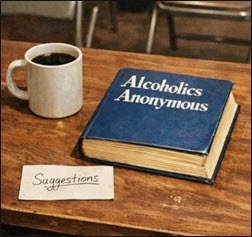
Suggestions in Early SobrietySobriety was uncharted territory when I first arrived in AA at the age of 21. The many experiments I tried on my own to stop or control my drinking proved that point. My best thinking had gotten me there. As a newcomer in the 1970s, especially at my age, I received a great deal of attention, encouragement, and good advice. Looking back, many of those suggestions in early sobriety were the things that started to change the course of my life, and for that, I remain forever grateful.

At my first meeting in 1976, the shades behind the speaker’s podium displayed the Twelve Steps of Recovery and the Twelve Traditions. What caught my eye was the sign listing the Twelve Steps. Just beneath the title was a line that read, “As Suggested as a Program of Recovery.” Those words changed my life. There were no orders, no “thou shalt nots,” and no demands. Recovery was presented as a suggested path. I liked that.

One Day at a Time

On my first day in AA, the suggestion I latched onto was to try AA’s way of staying sober one day at a time. For me, this was a revelation. I could do almost anything for 24 hours.

But at 21 years old, the thought of never drinking again for the rest of my life was overwhelming. If I kept thinking that way, I’d probably be drunk within a day or two. One day at a time, however, seemed possible.

Ninety Meetings in Ninety Days

Another suggestion was to commit to attending AA meetings for 90 days, one day at a time. At first, I balked at the idea. It seemed excessive. But the more meetings I attended, the more I liked what I was hearing and learning. There were practical, common-sense solutions being shared that I could apply to my own recovery.

Stay Out of the Lion’s Den

Since I enjoyed playing guitar and singing in bars, one suggestion came with a warning: “If you’re not a lion tamer, don’t go into the lion’s den.”

In other words, stay out of the bars.

I bristled at that advice. I was young, dating, socializing, and didn’t want to feel restricted. But the more I thought about it, the more sense it made.

If I were on a diet, it probably wouldn’t be wise to spend my days hanging around a doughnut shop. Likewise, if I had a gambling problem, spending time at the racetrack would hardly be a good idea.

The lesson was simple: avoid people, places, and things that might trigger the urge to drink.

Don’t Compare Your Story

Another suggestion that helped me was not to compare my alcoholism to someone else’s story. That can become an endless exercise.

It would have been easy for me to convince myself that I didn’t belong in AA because I had never been arrested, never received a DUI, or never been divorced five times. Yet in recovery, we all arrive with different drinking histories and different life experiences.

What unites us is that alcohol has become a problem.

I could identify with the powerlessness, the chaos, the depression, and the overall calamity that came from taking that first drink.

This was especially important for me because AA in the 1970s was not filled with twenty-year-olds. It would have been easy to focus on the differences and conclude that I didn’t belong.

Instead, I learned to identify with the similarities. That identification helped break my isolation and drew me closer to others in the fellowship.

Getting a Sponsor

Getting a sponsor was probably the most beneficial suggestion I received. Sponsors can cover a lot of ground in recovery, and for me, that guidance was invaluable.

I met with my sponsor daily, and I still credit much of his advice for helping me stay sober to this day. It was suggested that men sponsor men and women sponsor women, which always seemed like a wise idea.

Over coffee after meetings, my sponsor would review topics that had been discussed, help me work through the Twelve Steps, and share his own experiences—what had worked for him and what had not.

I found those conversations incredibly helpful.

He also suggested that I avoid substituting non-alcoholic beverages for alcohol. As he explained, he never drank for the taste; he drank for the effect. He cautioned me against replacing alcohol with marijuana or other drugs and emphasized that recovery in AA is built upon rigorous self-honesty.

Looking back, many of the most valuable lessons and suggestions I received came from my AA sponsors over the years.

Other Suggestions That Helped Me

Other suggestions that aided my recovery included getting active in the fellowship, finding a home group, attending meetings regularly, working the Steps, and reading the book Alcoholics Anonymous.

These and many other suggestions helped me build a comfortable and lasting sobriety.

Even today, I continue to attend in-person meetings to learn. I still hear new ideas and suggestions that improve the quality of my life and, in turn, benefit those around me.

Suggestions, Not Restrictions

What I discovered is that the suggestions offered in AA were never intended to restrict my life. They were offered to help me live it more fully.

For me, following those suggestions opened the door to a life that is happy, joyous, and free—and for that, I remain forever grateful.

Joy of Living Sober in AA

Posted on September 24, 2026October 21, 2026 by Jim C.

Joy of Living Sober in AA

There is a newness that comes with recovery in AA when you are working and living the AA program of recovery. It is the joy of living sober. That change in attitude seemed to occur gradually for me as I got sober. Sometimes the changes were subtle and went unnoticed. Nonetheless, change was occurring. As a result, my emotions became less volatile, my actions were less impulsive, and my thinking became more balanced. I assume this is true for others in the fellowship who are trying to work and live within the framework of the AA 12 Steps of recovery.

In my own recovery, life became a gradual letting go of old ideas and embracing new and better ways to live and deal with life. Serenity became a new norm for living. Chaos started to lessen, fears diminished, and hope started to abound.

For me, sobriety was freedom from slavery to alcohol and its irrational way of thinking and acting. It didn’t happen overnight, nor did it occur in my first 90 days. I got a taste of those potential benefits when I was on AA’s “Pink Cloud.” Believe it or not, it was a time of trust, faith in AA, and hope. There is a lot of potential in sobriety, and thank God I also had great teachers and mentors to guide me along this path.

The Power of Example

In the fellowship of AA, I am surrounded by powers of example—most often good, and sometimes not so good, but they were all teachable moments. It is comforting to know that others are trying to improve themselves and live this new way of life, too.

They lead and inspire me by the power of example through the way they live their lives and deal with life’s ups and downs. That, in itself, is a living testimony to the Big Book of Alcoholics Anonymous. There is joy in seeing people continue to grow, change, and move forward in sobriety.

That inspired me.

A New Way of Seeing Life

There comes a time in sobriety when you start to realize you are walking a new path. Fear, resentment, and self-pity may still show up, but they no longer have to control your life.

As the committee in my head quieted down, I became grateful for the progress I had made and the distance I had come. My mind wasn’t racing all the time. I had an opportunity to enjoy life just as it was.

These were moments to give thanks and be grateful for the peace of mind I was finding in sobriety.

This is the joy of living sober in AA.

Sobriety can bring contentment—the understanding that life remains good even when problems arise. For me, this grew into genuine joy and the assurance that I was on the right path.

I learned to trust my Higher Power and follow His path, whatever happened.

More Than Just Stopping Drinking

When I came to AA, I would have been satisfied with simply stopping drinking. But there was so much more.

I would have sold myself totally short.

There were 12 Steps in recovery that dealt with the whole alcoholic person. Working these 12 Steps on a daily basis gave me an opportunity to deal with illnesses, deaths, financial woes, and all of life’s joys and sorrows.

Sobriety did not make life perfect. Difficult days remained, along with things I did not understand or could not control.

But my joy came from knowing that I no longer had to drink to deal with them.

I could live life on life’s terms.

Life on Life’s Terms

I could experience the good without needing alcohol to enhance it, and I could experience the difficult without needing alcohol to escape it. That was something I never understood when I was drinking.

The joy of living sober isn’t that everything goes my way.

It is knowing that whatever comes my way, I don’t have to drink.

For that, I am forever grateful to my Higher Power and to AA.

Making Living Amends

Posted on September 22, 2026October 21, 2026 by Jim C.

Making Living Amends – Living Sober a New Way of Life

Making Living Amends

I'm Sorry Band AidAs an alcoholic in recovery, one of the more uncomfortable tasks is making amends. When I was actively drinking, I cared little if I hurt someone’s feelings, was dishonest, or would not respect the boundaries of others. The sad truth was that nothing got in the way of my will and my drink.

I was selfish to the core.

However, now that I wasn’t drinking, I was confronted by my own bad behavior through the eyes of others.

The result was broken relationships, lost friendships, and a lack of trust. In early sobriety, I still was unable to fathom the depths to which I had sunk in my bottom of drinking. I could not cover my past bad actions with an “I’m sorry” Band-Aid. Friends, family, and associates had heard this way too many times to accept it now.

Why should they?

Over and over again, I had already proved that I wasn’t trustworthy.

Making Things Right

So, I am not talking here about a monetary amends for something of value I’ve stolen. This is not about cash reimbursement for monies taken.

I am referring to something far more precious that I robbed—the peace of mind, the respect, and the consideration that I completely violated in my dealings with others.

How do I make amends for that?

First of all, an amend is not just saying, “I’m sorry.” By definition, to amend means to correct a wrong and make things right. Yes, it could be by doing something good for an injured party or paying compensation to make up for a mistake, injury, or wrong you have caused.

But in my own experience, it is not just an exchange of cash and an “I’m sorry” so I could sleep better at night. Making amends—even by AA standards—is more than that.

In AA, we recover one day at a time, and recovery is not a singular, one-time event. Perseverance in sobriety adds up—it’s cumulative. If I truly understand recovery, it is the realization that sobriety is a new way of life, where there is always room for improvement.

For me, that is where living amends became so important.

Living Amends

To those we have hurt the most, it is not the mea culpa words that say, “I’m guilty.” Rather, it is my ongoing actions in recovery that can repair those bonds.

Actions do speak louder than empty words.

This does not by any means mean that relationships will improve overnight or even in the short run.

My sincerity will be measured by my endurance and commitment to changing how I live and act. Once broken, trust can take a long time to repair.

Some people may never accept amends, while others may take years to believe I have changed. Parents and loved ones may eventually come to believe it when they witness me striving to live right and make the right choices.

Seeing Life Through Different Eyes

In much later years of sobriety, it wasn’t until I had my own family that I realized what worry could be like when your child comes home late.

When I drank, I never had any concern if I stayed out partying for days—and no one knew if I was dead or alive.

Only then did I realize the pain I had inflicted on others.

One thing I am forever grateful for is AA and persevering in this new way of life, one day at a time.

I remember I was six months sober when my father reached out and asked me if I could help my brother get sober. It wasn’t easy, but by God’s grace, I got my brother to go to one meeting.

He never drank again after that first day in AA.

My mom was so proud that her two sons were going to AA, staying sober, and living life to its fullest. Others can see the value of recovery and take joy in its results.

My mom was no longer ashamed and, by God’s grace, lived long enough to see this happen before she passed.

Restored peace of mind is priceless. In time, those living amends of simply trying to live right brought other family members into the fellowship.

What a gift this is for all.

A New Way of Life

Making living amends in recovery is an ongoing process. It is living the Twelve Step program of recovery in our everyday lives.

In doing so, we become whole again.

People begin to take notice. We become trusted, and value is added to our lives because others can see consistent change. Our actions become trustworthy and honest.

In time, our opinions and counsel may even be sought.

I am forever grateful to AA, the fellowship, and my Higher Power for this new and ongoing wonderful life.

  • 1
  • 2
  • 3
  • 4
  • Next

Recent Posts

  • Routines in AA Recovery
  • Staying Stopped Was the Hard Part
  • The Wisdom of an AA Slogan
  • Alcohol Was No Longer the Answer
  • AA Keep It Simple
  • I Came to AA When I Was 21
  • Pink Clouds in AA
  • Letting Go and Letting God
  • Boredom in Early Recovery
  • Isolation Is a Dangerous Place

QUICK RESOURCES

Is AA For You?

AA's 12 & 12

Adult Children of Alcoholics

Alcoholics Anonymous

AA How it Works

AA Meeting Guide

AA Preamble

Al-Anon

As Bill Sees It

Big Book Recovery

164 And More!

24 Hours A Day

Daily Ponderables

Daily Reflections

Everything AA App

Narcotics Anonymous NA

Recovery Calculator

Stories of Recovery

Videos and Podcasts

Recovery

AA recovery is living sober one day at a time through the Twelve Steps and fellowship.

Learn more about Recovery.

Unity

Unity in AA means recovering together by placing our common welfare above individual differences.

Learn more about Unity.

Service

Service is gratitude in action, carrying the AA message to those who still suffer.

Learn more about AA Service.

©2026 Sobriety Chronicles